Completion of the extraordinary maintenance of Michelangelo’s Last Judgement
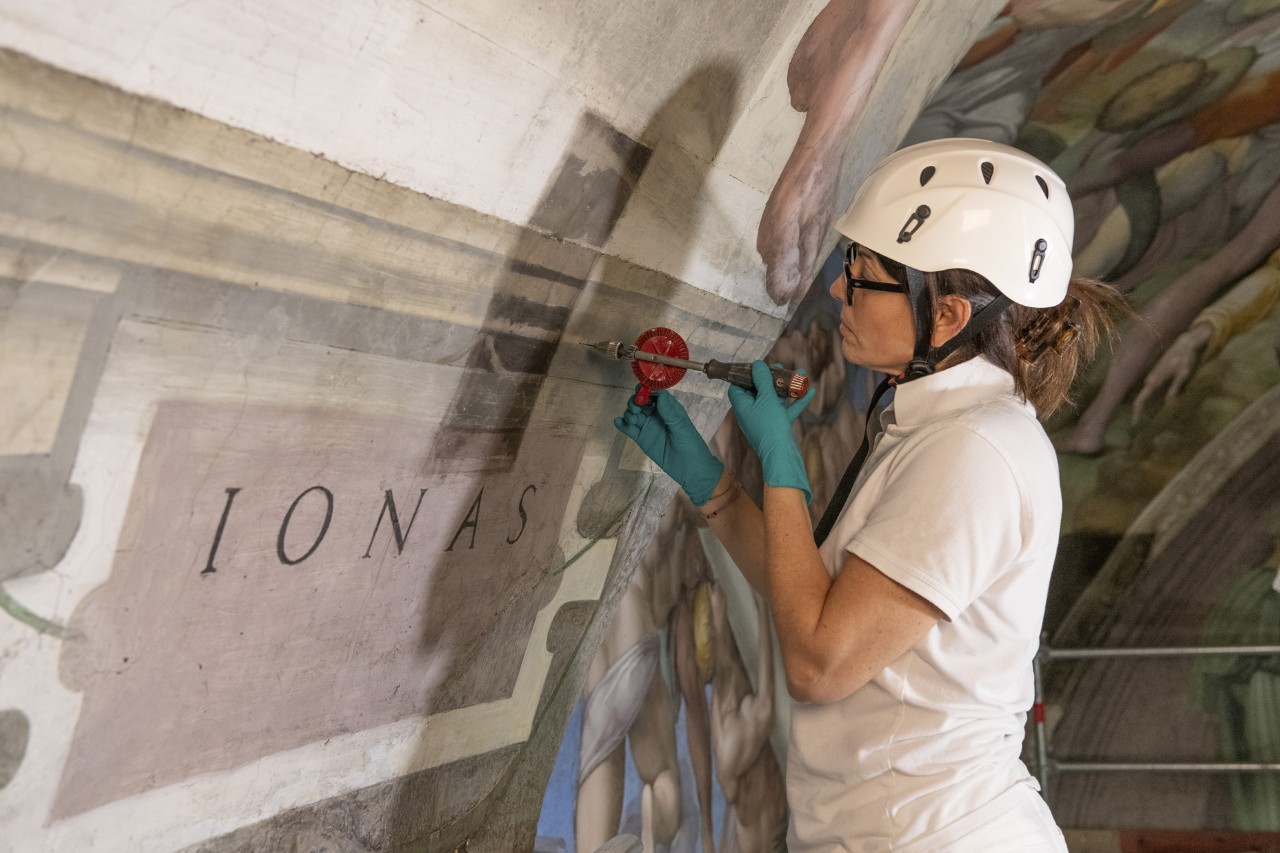
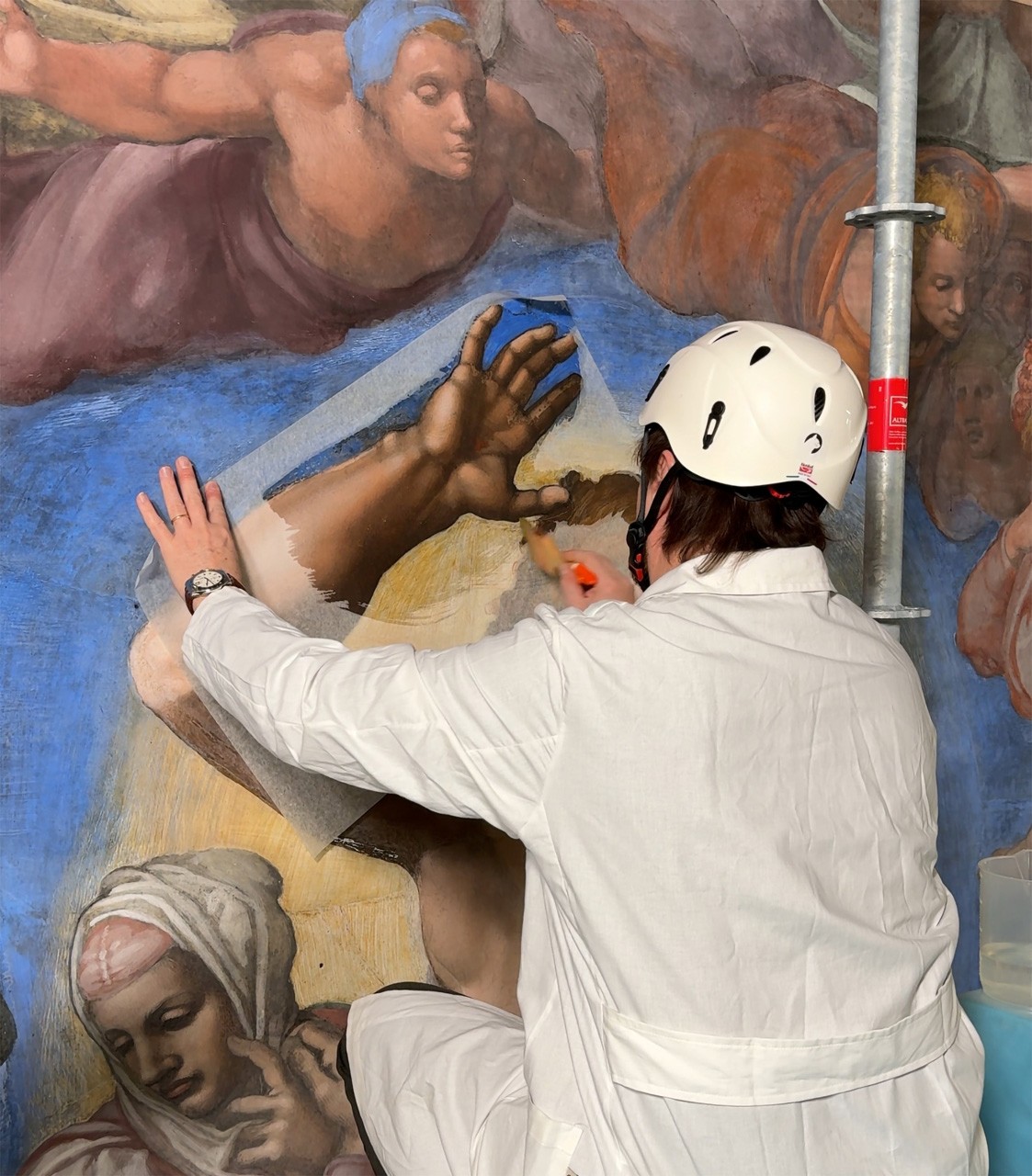
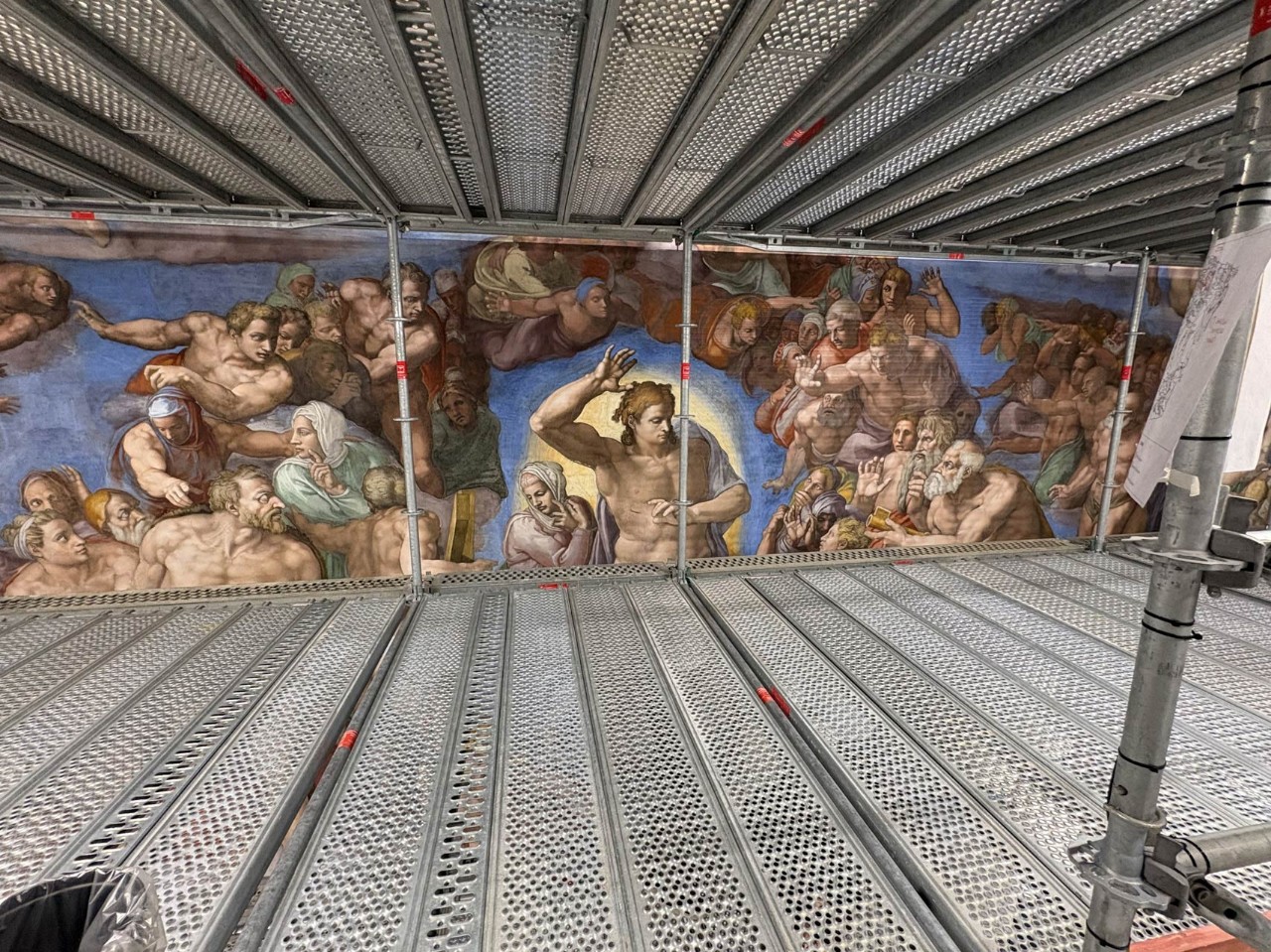
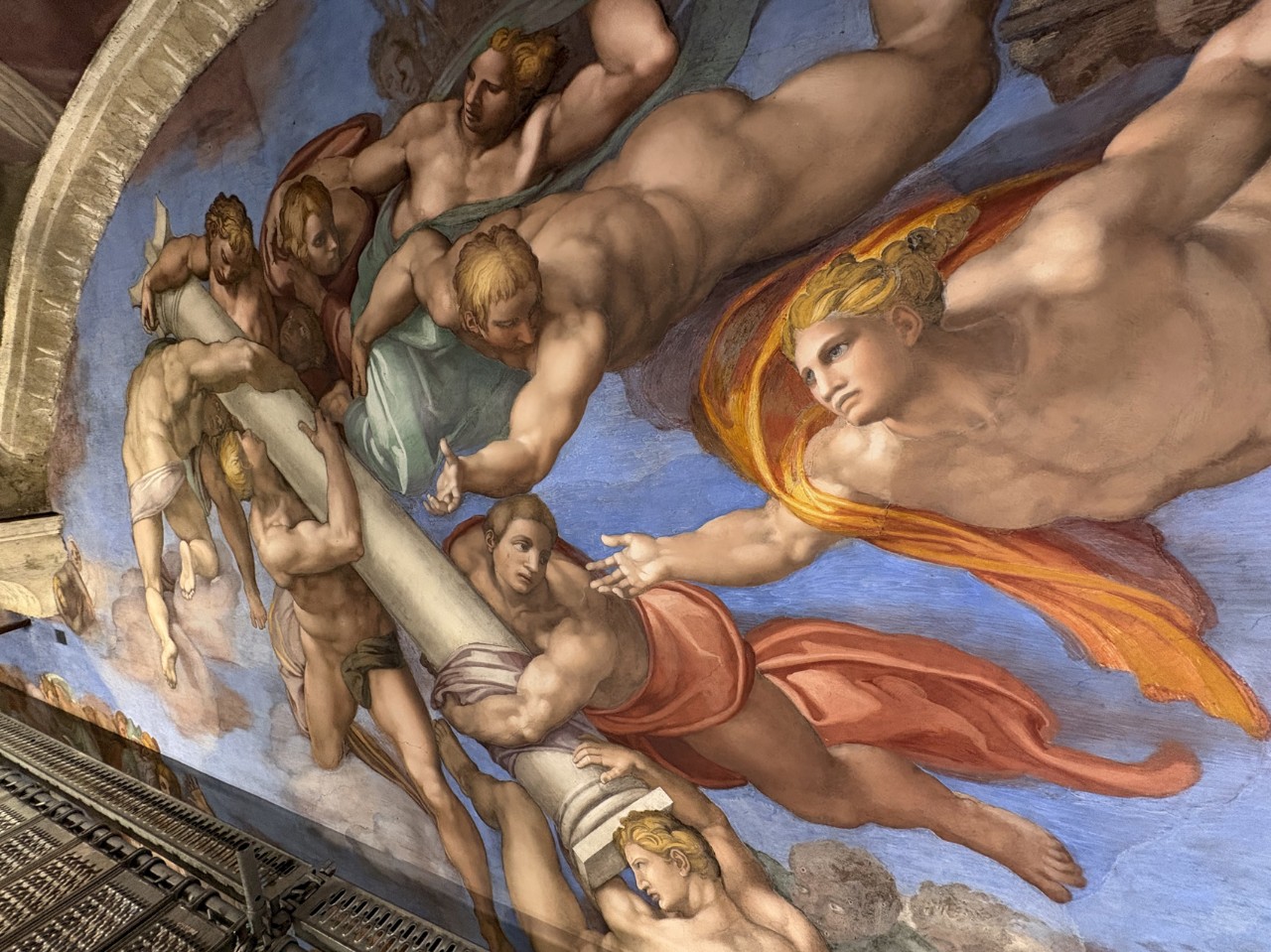
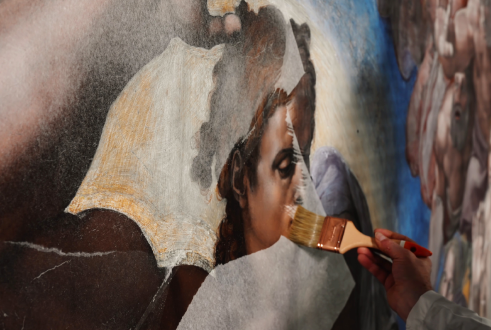
Michelangelo’s Last Judgement is once again visible, in all its surprising power and in the splendour of its original colours, revealed by the recently concluded extraordinary maintenance work. Initiated on 1 February, with the erection of scaffolding in the Sistine Chapel, the extraordinary maintenance involved the removal of a widespread whitish film from the painted surface. Almost invisible to the naked eye, this thin film obscured Michelangelo’s iridescent hues, softening the composition’s vigorous chiaroscuro.
The Sistine Chapel has remained open for the entire duration of the work. “The Vatican Museums are the Museums of welcome”, comments the Director Barbara Jatta, “Their mission is always to keep their doors open to the faithful and visitors. This was also the case for this exceptional opportunity to care for and maintain one of its most precious jewels: Michelangelo’s fresco, which depicts, with dramatic intensity, the end of time. The extraordinary maintenance work – under the supervision of the Governorate of Vatican City State, coordinated by the Museums Directorate and supported by the Florida Chapter of the Patrons of the Arts in the Vatican Museums – was carried out by the Paintings and Wood Materials Restoration Laboratory, which worked in collaboration with the Department of XV-XVI Century Art, the Cabinet of Scientific Research and the Conservator’s Office of the Vatican Museums”.
“In autumn 1541”, explains Fabrizio Biferali, Curator of the Department of XV-XVI Century Art, “after almost five years of immense toil on a scaffold lit only by the light that filtered through the windows in the walls or by dim torches, Michelangelo was finally able to reveal his greatest pictorial masterpiece to the world. Today, following the completion of the extraordinary conservation work, Michelangelo’s colossal fresco shines once more with its vivid colours, its vibrant chiaroscuro, its extraordinary variety of poses, perspectives, gazes and intertwined bodies, and its unrivalled and unequalled visual power”.
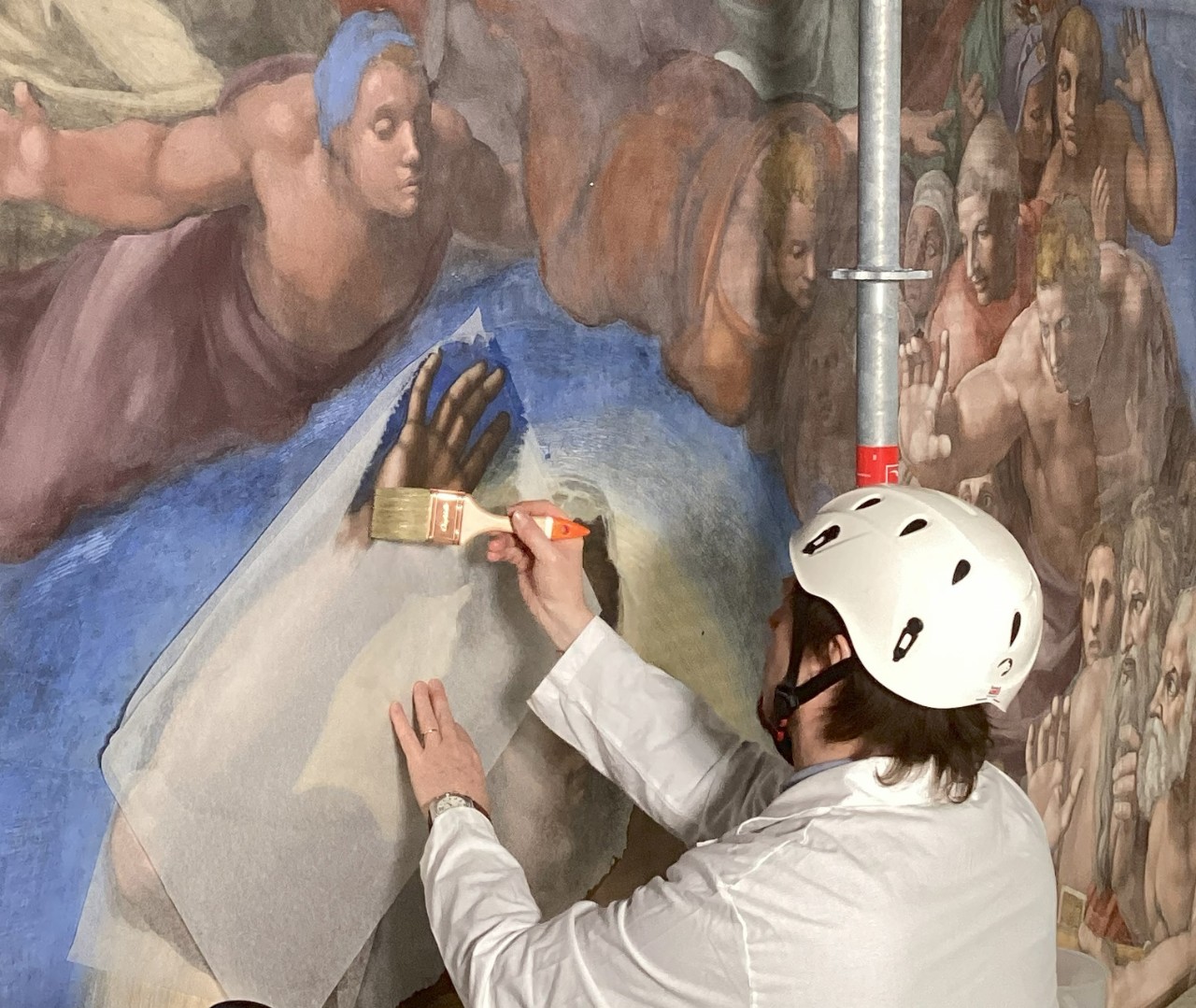
“In 2024”, explains Fabio Morresi, Head of the Cabinet of Scientific Research, “we were able to verify that the Last Judgement had exhibited widespread discolouration caused by the presence of a salt: calcium lactate. Gas chromatographic analyses detected the presence, in the atmosphere of the Sistine Chapel, of lactic acid, a molecule that can be released through the biological process of transpiration. The formation of a white veil was therefore due to the reaction between lactic acid and the calcium ions normally present on the fresco paint. Calcium lactate is highly soluble in water and could therefore be easily removed from the surface without causing the slightest damage to the fresco”.
Paolo Violini, Chief Restorer of the Painting and Wood Materials, comments: “Although from a technical point of view the cleaning operation proved relatively straightforward, consisting of a quick treatment with Japanese paper and distilled water, the visual impact was remarkable, restoring the fresco’s vibrant colours and chiaroscuro as they appeared following the major restoration of 1994, thereby reigniting critical debate on the relationship between the work’s physical condition and its interpretation. The intervention also provided an important opportunity to carry out a comprehensive update on the state of conservation of the work, and to conduct a thorough review of the pictorial restoration, extending also to the decorated base”.
The new challenge for the Vatican Museums team – made up of curators, conservators, restorers, diagnosticians and technical engineers – will be to prevent or minimise as far as possible the recurrence of similar phenomena. This will be possible thanks to a multidisciplinary approach based on understanding the mechanisms behind such alterations and on controlling the numerous adjustable parameters via the sophisticated climate control system in the Sistine Chapel.
“The result of the extraordinary maintenance of the Last Judgement”, observes Marco Maggi, Head of the Conservator’s Office, “is the outcome of a long-term programme of continuous maintenance and care of the Sistine Chapel, based on a method that involves the coordinated and repeated execution of comprehensive interventions and inspections over time. It is a method to which the Museums Directorate has remained steadfastly committed over the last fifteen years and which testifies to the tangible value and foresight of ‘best practices’ in preventive conservation”.