
From the Tiber to the Nile
Pope Gregory XVI’s expedition in the wake of Napoleon
Vatican Museums Conference Hall – in person and live streaming
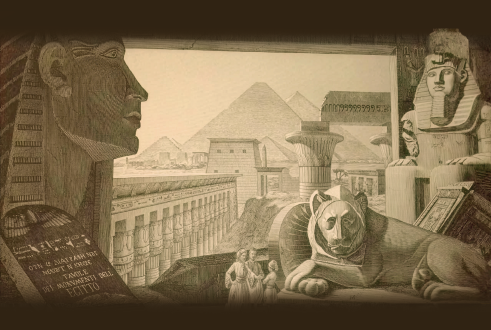
On 25 June, at 05.00, a new event in the Thursday in the Museums series will be held. The conference “From the Tiber to the Nile” will provide an important opportunity to highlight how Rome – first as an imperial city and later as the seat of the Papacy – was the cradle of scientific Egyptology and the fascination with Egypt in Europe. The inauguration of the new Egyptian Museum in the Vatican in 1839, at the behest of Pope Gregory XVI Cappellari, celebrated the “Egyptian Museum of Rome”, the only one among the great capitals of Europe to possess an extraordinary millennia-old heritage of Egyptian monuments long before the formation of the great collections of Egyptian antiquities in the first half of the nineteenth century.
“The conference,” explains Alessia Amenta, Curator of the Department of Egyptian and Near Eastern Antiquities at the Vatican Museums, “celebrates an exceptional yet little-known event: on 21 September 1840, three ships of the Papal Navy set sail from the port of Civitavecchia, bound for Alexandria in Egypt. At the helm was the renowned Honorary Captain of the Papal Navy, Alessandro Cialdi, who had been awarded forty-one honours throughout his extraordinary career”. It was the expedition that would become known as Pope Gregory XVI’s Roman Expedition to Egypt. The motivation for the expedition stemmed from the need to recover blocks of alabaster to rebuild the altar of the Basilica of Saint Paul Outside-the-Walls, which had been destroyed by a terrible fire on the night between 15 and 16 July 1823. Following diplomatic exchanges, the court of the Khedive of Egypt, Mohammed Ali, granted the alabaster as a gift to the Pope, who decided to take advantage of this opportunity also to explore the Nile Valley, its monuments, the topography of the area, its flora and fauna, its natural features and, last but not least, its modern customs and traditions.
Introduced by the Director of the Vatican Museums, Barbara Jatta, the speakers will be Alessia Amenta, Thomas Mathà, President of the Italian Academy of Philately and Postal History – who will explain the role of the Levant postal service in the nineteenth century, with particular reference to correspondence from the Papal States – and Enrico Nigris, Department of Architecture, University Roma Tre, whose contribution will focus on the figure of the seafarer, officer and scholar Alessandro Cialdi.


