
Two Apostolic Visits to Bangladesh
John Paul II (1986) and Francis (2017)
Ethnological Museum Anima Mundi, Vatican Museums
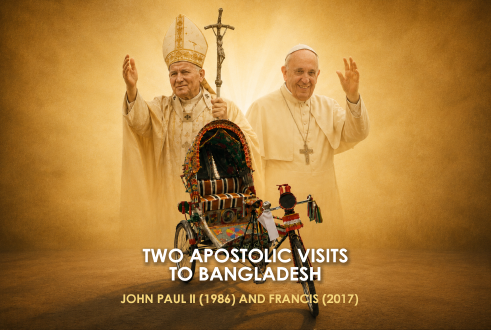
Starting on 4 August, the Vatican Museums will inaugurate the exhibition “Two Apostolic Visits to Bangladesh”. The exhibition will retrace two significant moments in the recent history of the Church and her relations with Bangladesh, weaving together historical memory, intercultural dialogue and artistic heritage. It will bring together the three-wheeled riksha used by Pope John Paul II during his apostolic visit to Dhaka in 1986, subsequently donated to the Vatican Museums, and two paintings on canvas by the Bengali artists Alokesh Ghosh and Ahmed Shamsuddoha.
The centrepiece of the exhibition is the traditional rickshaw, symbol of the country’s daily life and cultural identity, which becomes a tangible testament to the closeness of the Pontiffs to the people of Bangladesh and their desire to engage with the country’s culture, traditions and diverse religious communities. The painting by Alokesh Ghosh, a renowned and internationally acclaimed watercolourist, commemorates the historic visit of Saint John Paul II on 19 November 1986, the first stop on a long apostolic journey through Asia and Oceania. The Pontiff is depicted aboard a rickshaw, surrounded by members of the Church and the local population, in a composition that conveys the spirit of a journey based on encounter and mutual respect. During that visit, Saint John Paul II issued a call for fraternity, justice and peace, recognising the value of collaboration between Muslims, Hindus, Buddhists and Christians in building the common good.
The second painting, by Ahmed Shamsuddoha, a leading figure in contemporary Bengali painting, is dedicated to Pope Francis’ apostolic visit, which took place from 30 November to 2 December 2017, on the theme of “Harmony and Peace”. Through the expressive language and vibrant colours of the Bengali artistic tradition, the artist depicts the Pontiff seated in a richly decorated rickshaw as he greets the crowd with a gesture of blessing. The composition evokes the central themes of the visit, translating them into an image of hope: interreligious dialogue, reconciliation, solidarity with the most vulnerable, and the welcoming of Rohingya refugees fleeing Myanmar. The painting bears witness to Pope Francis’ message that harmony arises from listening, compassion and a shared commitment capable of overcoming religious, social and cultural differences.
On the occasion of the exhibition, the two paintings, belonging to the Apostolic Nunciature in Bangladesh, underwent meticulous conservation restoration procedures carried out by the Painting and Wood Materials Restoration Laboratory, which restored them to full legibility through the cleaning of the painted surface and the reintegration of missing parts.
The exhibition highlights the artistic heritage of Bangladesh, and reaffirms the role of art as a universal language of encounter, mutual understanding and fraternity among peoples.